

Human body is made up of trillions of cells. Usually, human cells grow and make more cells when the body needs them. This happens through cell division. When cells get old or get hurt, they die, and new cells come in their spot.
Sometimes, this orderly process breaks down, and abnormal or damaged cells grow and multiply uncontrollably and spread to other parts of the body. This phenomenon is referred to as Cancer.
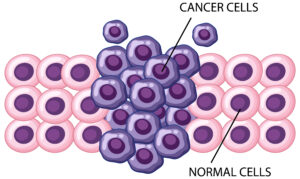
Cancer can develop anywhere in the human body. Cancerous cells can aggregate to form tumors, which are abnormal tissue growths. These tumors can either be cancerous (malignant) or non-cancerous (benign).
Malignant tumors infiltrate nearby tissues and can metastasize to distant sites, forming new tumors. Blood cancers like leukemias typically don’t form solid tumors.
Benign tumors do not invade neighboring tissues and are generally not harmful. They often do not recur after removal, unlike cancerous tumors which may reappear.
Despite being non-cancerous, benign tumors can grow large and cause severe symptoms, especially if they occur in critical organs like the brain.
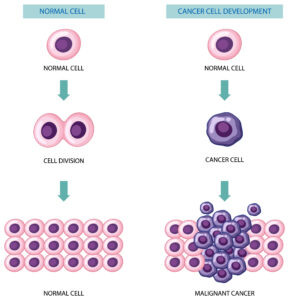
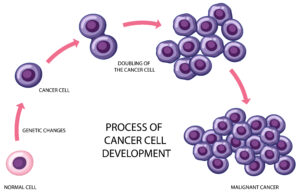
Cancer is a genetic disease; it is caused by changes to genes that control the way our cells function, especially how they grow and divide.
Genetic changes that cause cancer can happen because of:
Normally, the body gets rid of cells with damaged DNA before they become cancerous. However, as we get older, the body’s ability to do this decreases. This is why there’s a greater chance of getting cancer as we age.
Each person’s cancer has a unique combination of genetic changes. As the cancer continues to grow, additional changes will occur. Even within the same tumor, different cells may have different genetic changes.
Cancer encompasses over 100 distinct types, each typically designated by the specific organs or tissues where they originate. For instance, hepatocellular carcinoma originates in the liver, while ductal carcinoma arises in the breast tissue. Additionally, cancers may be categorized based on the histological type of the cells involved, such as epithelial cells or squamous cells.
Here are some categories of cancers that begin in specific types of cells:
Carcinoma: Carcinomas are the most common type of cancer. They are formed by epithelial cells, which are the cells that cover the inside and outside surfaces of the body. There are many types of epithelial cells, which often have a column-like shape when viewed under a microscope.
Sarcoma: Sarcomas are cancers that form in bone and soft tissues, including muscle, fat, blood vessels, lymph vessels, and fibrous tissue such as tendons and ligaments.
Osteosarcoma is the most common cancer of bone. The most common types of soft tissue sarcoma are Leiomyosarcoma, Kaposi Sarcoma, malignant fibrous histiocytoma, Liposarcoma, and Dermatofibrosarcoma protuberans.
Leukemia: Cancers that begin in the blood-forming tissue of the bone marrow are called leukemias. These cancers do not form solid tumors. Instead, large numbers of abnormal white blood cells build up in the blood and bone marrow, crowding out normal blood cells. The low level of normal blood cells can make it harder for the body to get oxygen to its tissues, control bleeding, or fight infections.
There are four common types of leukemia, which are grouped based on how quickly the disease gets worse [acute or chronic] and on the type of blood cell the cancer starts in [lymphoblastic or myeloid]. Acute forms of leukemia grow quickly and chronic forms grow more slowly.
Lymphoma: Lymphoma is cancer that begins in lymphocytes (T cells or B cells). These are disease-fighting white blood cells that are part of the immune system. In lymphoma, abnormal lymphocytes build up in lymph nodes and lymph vessels, as well as in other organs of the body.
There are two main types of lymphoma:
Multiple Myeloma: Multiple myeloma is cancer that begins in plasma cells, another type of immune cell. The abnormal plasma cells, called myeloma cells, build up in the bone marrow and form tumors in bones all through the body. Multiple myeloma is also called plasma cell myeloma and Kahler disease
Melanoma: Melanoma is cancer that begins in cells that become melanocytes, which are specialized cells that make melanin (the pigment that gives skin its color). Most melanomas form on the skin, but melanomas can also form in other pigmented tissues, such as the eye.
Brain and Spinal Cord Tumors: There are different types of brain and spinal cord tumors. These tumors are named based on the type of cell in which they formed and where the tumor first formed in the central nervous system.
Other Types of Tumors:
Consult with our expert surgeon for more than 50+ diseases
Next Steps:
